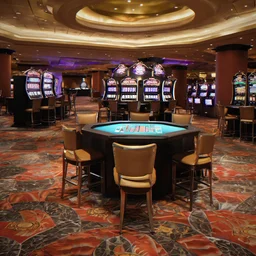
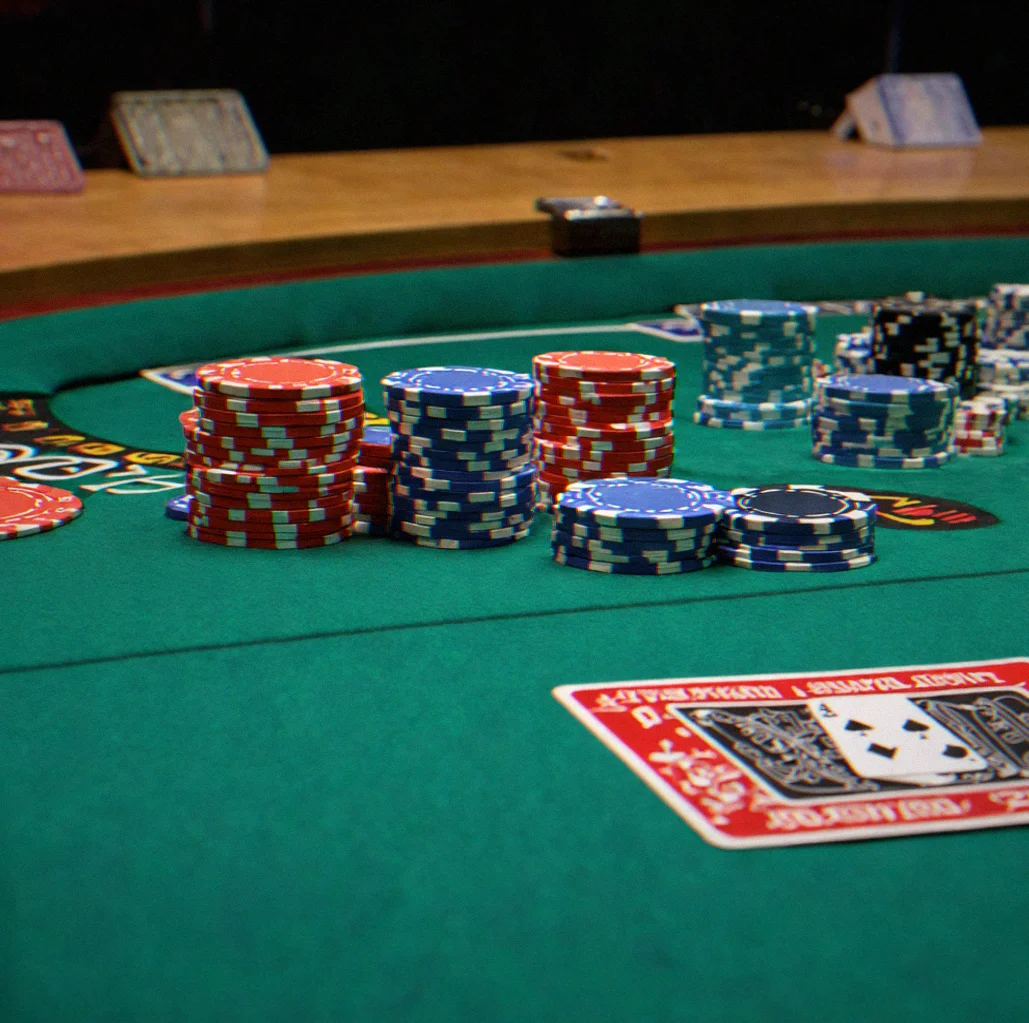
Casino-Grade Equipment
Real poker tables and chips for events that matter
Rent clay composite chips, felt tables, and tournament gear that looks and feels like the real thing.
Corporate tournaments, private games, and big events need equipment that doesn't look cheap. Stonegarden carries clay chips in denominations from $1 up to $10,000, professional poker tables between 36 and 42 inches with precision felt, card shoes and chip trays. Everything's built to handle over 200 uses a season without falling apart. Your guests will spot the difference between actual equipment and party store rentals. Your insurance and compliance team will too.
Tournament gear versus what you grab for a casual night
Clay composite chips sit at 9.5 grams. That weight hits different from plastic. When a player grabs one from a professional stack, they can tell instantly whether someone actually put thought into the event or just ordered whatever was cheapest. Stonegarden's lineup goes from white $1 chips all the way up to special-finish $10,000 pieces, same as what casinos use. They don't fade out, don't break at the edges, and stack tight enough that a dealer can shuffle without the cards sliding underneath.
Table size changes everything. A 36-inch round table fits 8 players without anyone feeling squeezed. Go to 42 inches and you've got room for 10. Smaller than that and the game feels cramped. Bigger and the dealer can't reach payouts from the middle without leaning. Professional felt doesn't stain and keeps its texture the whole season. Run a 12-hour tournament with hundreds of people watching, and cheap felt looks trashed by hour six.
Setup runs between 2 and 4 hours depending on how many tables you're putting down.
Insurance, regulations, and the stuff nobody wants to discuss until it matters
Gaming laws are different everywhere you look. In some places, private poker tournaments fall into a gray area—basically treated like a friendly game among friends, which means you're fine. Other jurisdictions want to see a gaming license, even if you're just inviting people over. Then there's the table rental companies themselves. Some cities require them to carry liability coverage, period. This isn't something you can just ignore. Before you book anything, you've got to understand what applies where you are. Start by talking to your venue. If they're letting you use their space, they've already thought about this stuff and have their own requirements. Running it from home or a private space? The rules still apply to you—there's no way around it. Stonegarden has liability insurance covering all their rental equipment. If something gets damaged while you're using it, that's handled either through your own event insurance or theirs, depending on what you've agreed to. They'll guide you through the whole thing. The key is being able to show that your event is private, invite-only, and not making money from the game itself, or that nobody's taking a cut. Have that conversation with whoever handles gaming enforcement in your area. Seriously. The stuff like chip values and table size and what the felt feels like—that's easy to figure out. The legal part is what actually kills events. Don't skip it.
Gear in the wild
What a real tournament setup looks like when you've got the details right. The felt is usually the first thing people notice—before the chips, before anything else. These are actual event layouts, not some polished photoshoot. This is what you're looking at when you're renting for events that run $5,000 and up.
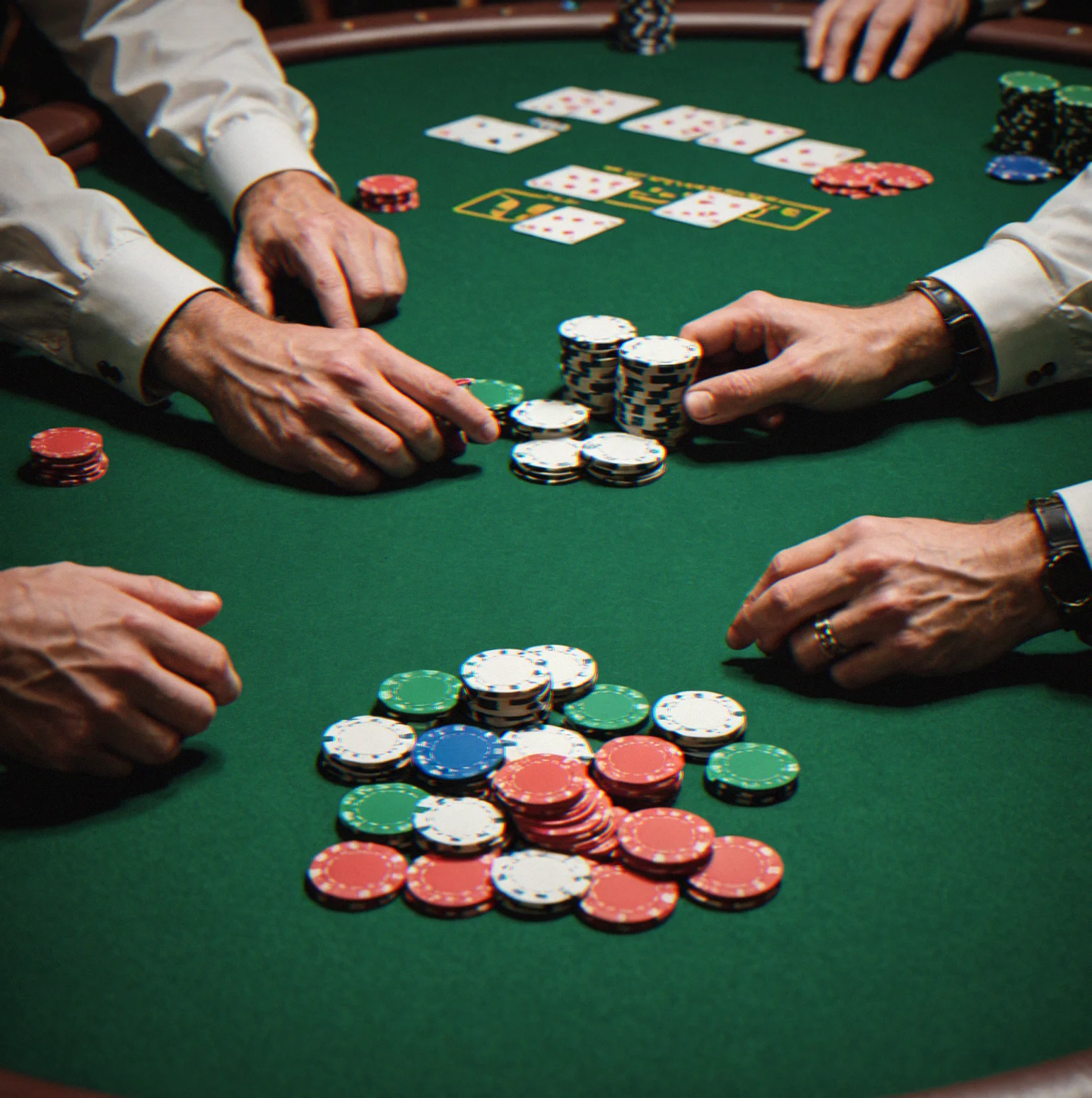
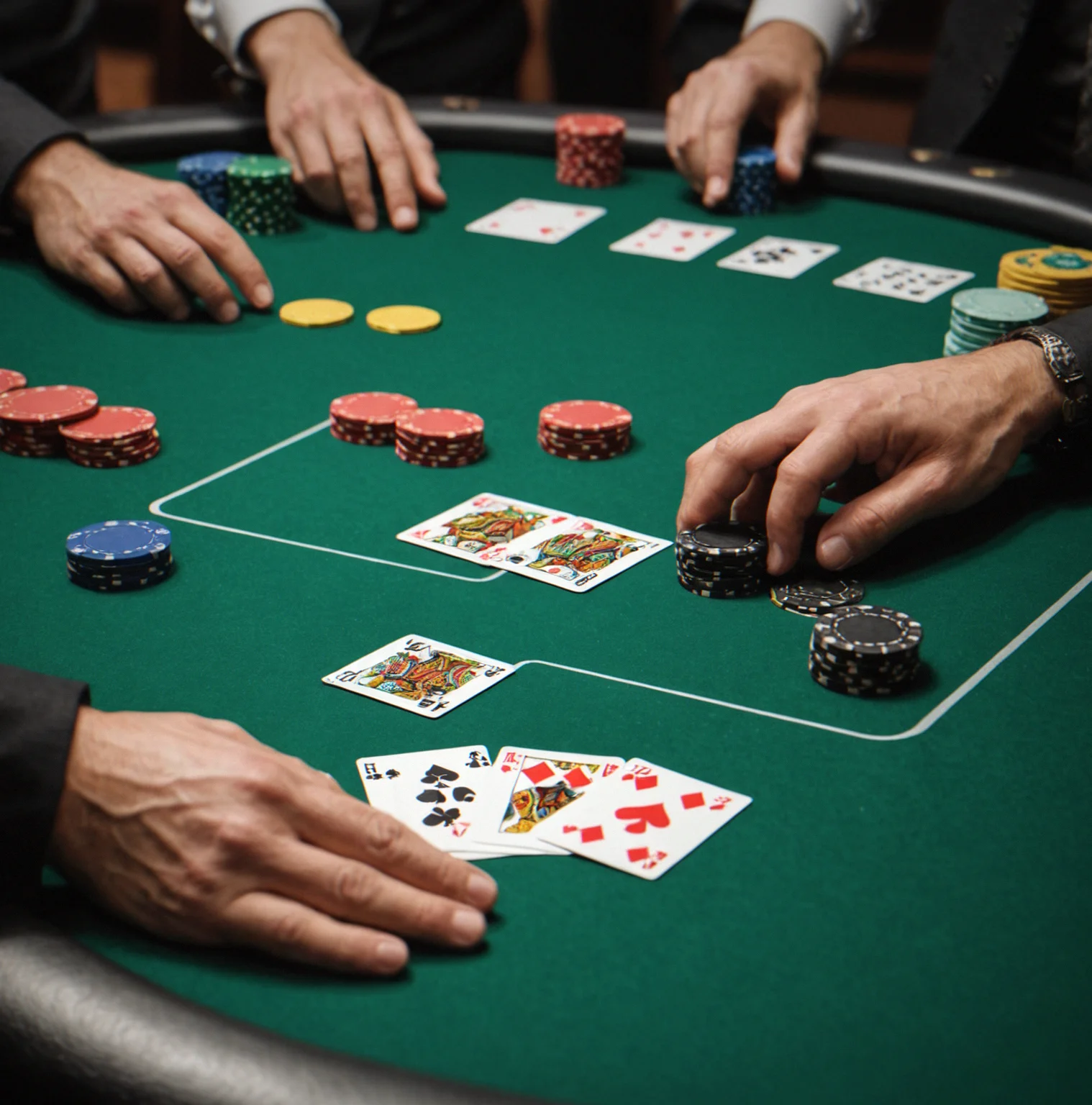
Clay composite chips stacked by value—white ones worth a dollar, greens at $25, crisp markings on each
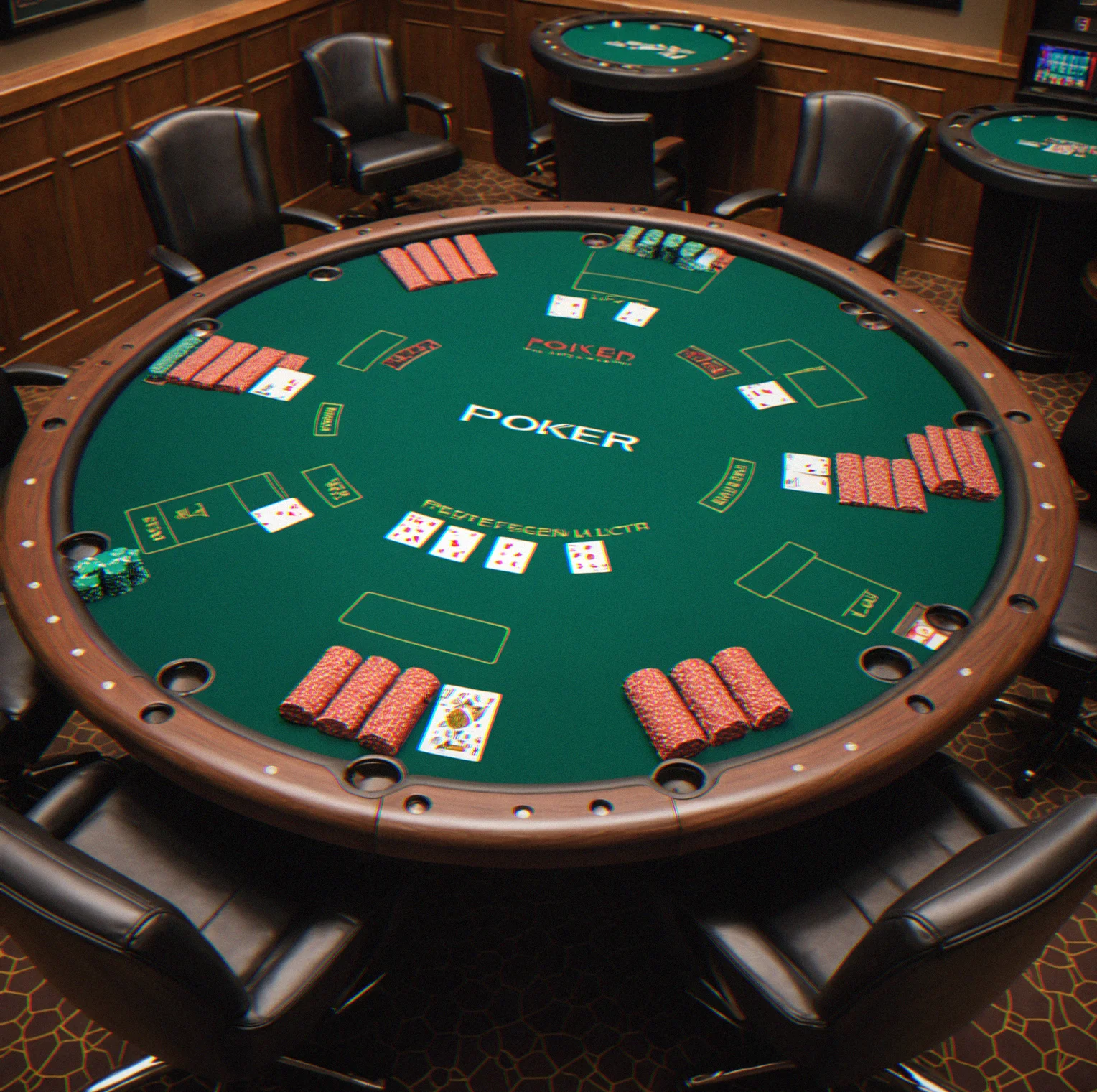
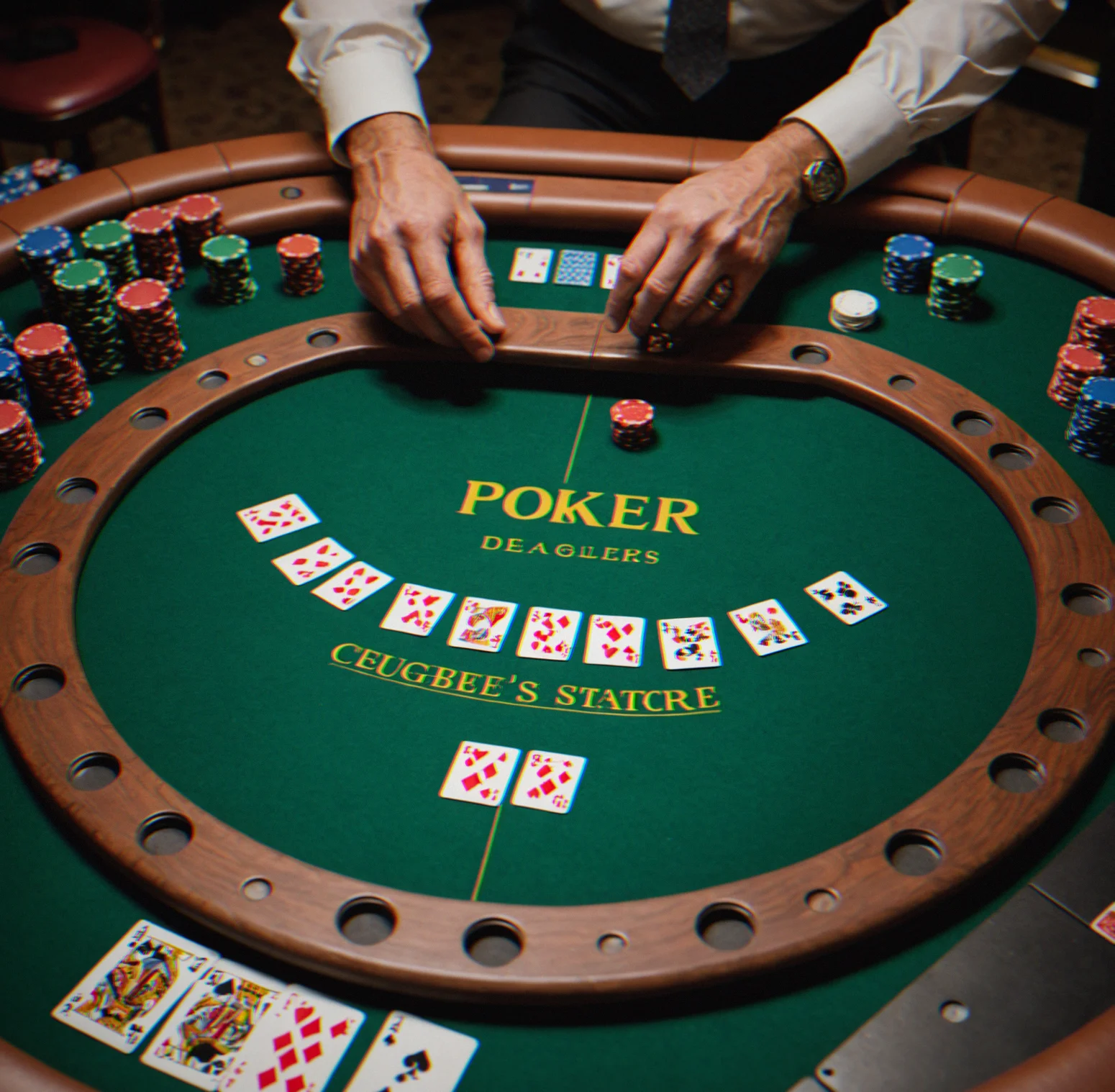
A 36-inch round table with that professional green felt you recognize immediately, chip tray built into the dealer spot, cup holders set into the rail
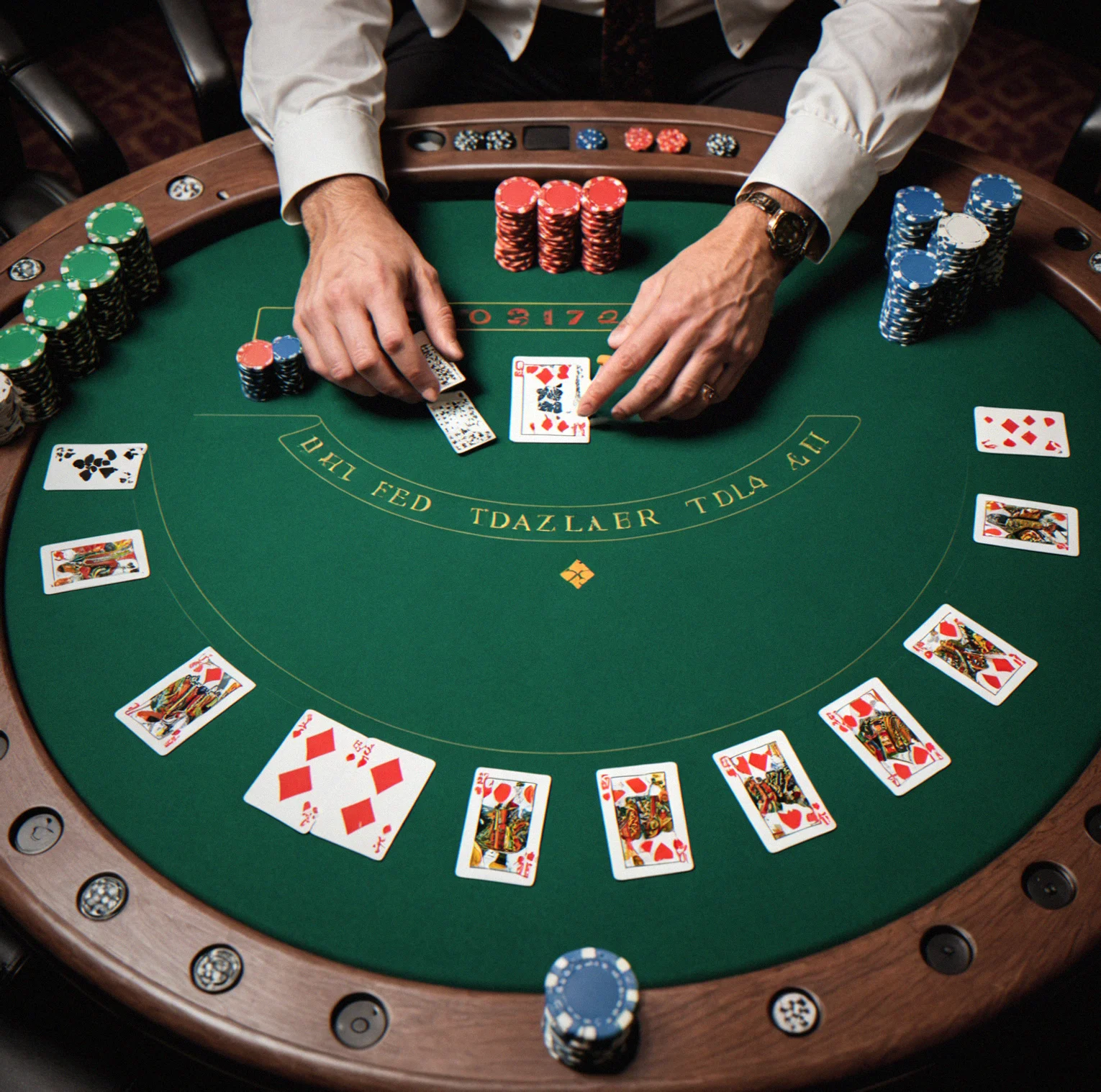
Card shoe sitting at the dealer station with a fresh deck loaded in, spring-loaded mechanism ready to go

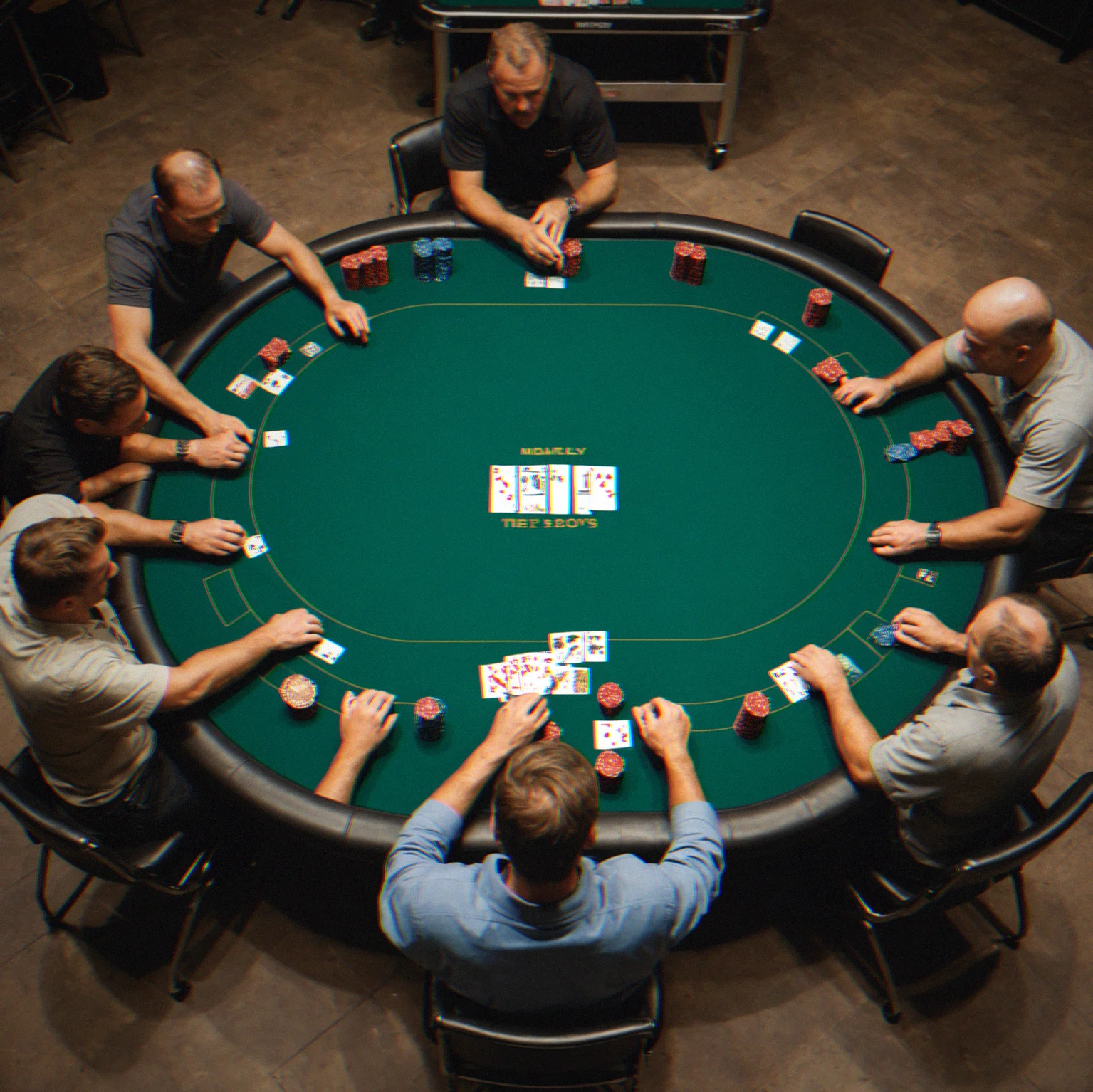
Three professional tables running in a corporate space with room for people to stand and watch
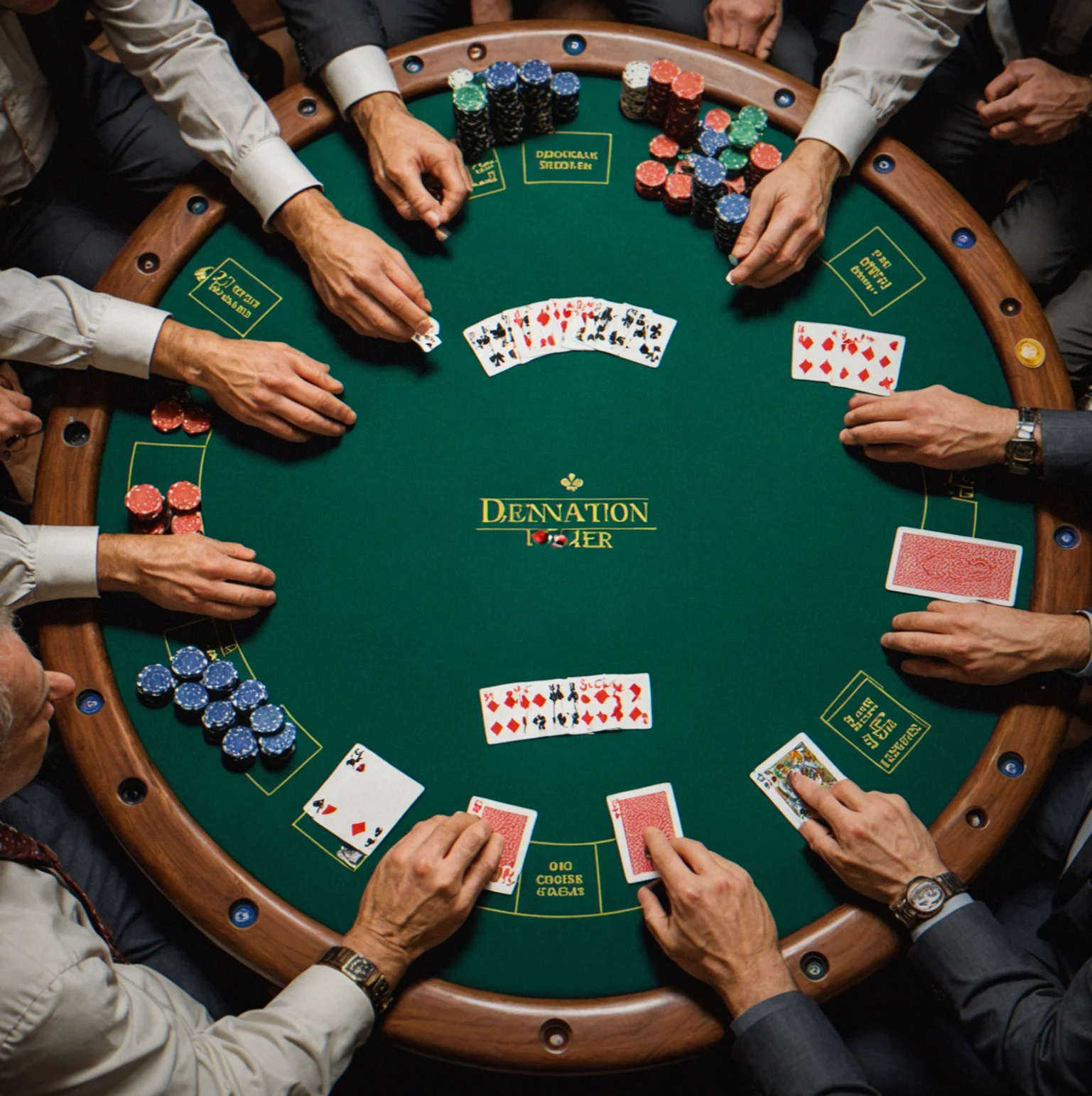
Chip tray broken down by denomination—singles through five-hundreds—organized so you can cash people out fast
Renting poker equipment without looking clueless
Pick your table size
A 36-inch round fits 8 players comfortably. Go up to 42 inches and you can squeeze 10 without everyone bumping elbows. Ovals are bigger — they range from 36 by 84 inches up to 36 by 108 depending on what your space allows. Measure before you commit. Each table needs around 300 square feet once you factor in chairrs and room for people to actually watch the game.

Calculate chip denominations
Most standard sets have $1, $5, $25, $100, $500, and $1,000 chips. Running an 8-player tournament where everyone starts with $5,000 means you're looking at somewhere between 1,600 and 2,000 chips total. Throw in another 20% if people are rebuying. Multiply all that by however many tables you're running if this is a bigger event.
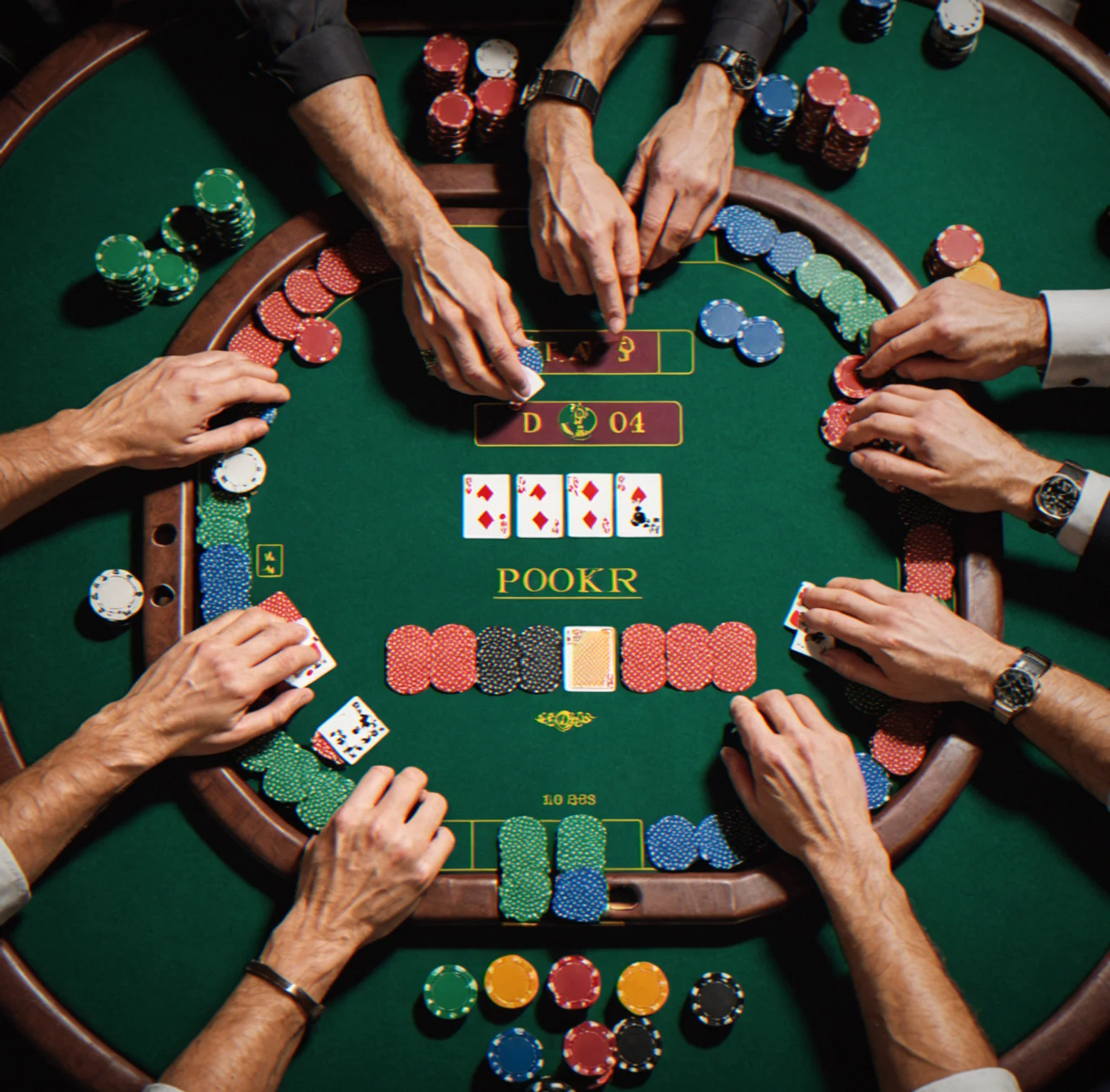
Felt quality matters
Good felt doesn't stain easily and holds up through a long night of play. Cheap felt gets bunched up, stains permanently, and just ruins the whole feel of the thing. Rental tables get re-felted every year or so, which means when you rent one you're getting a surface that's either brand new or in really solid condition.
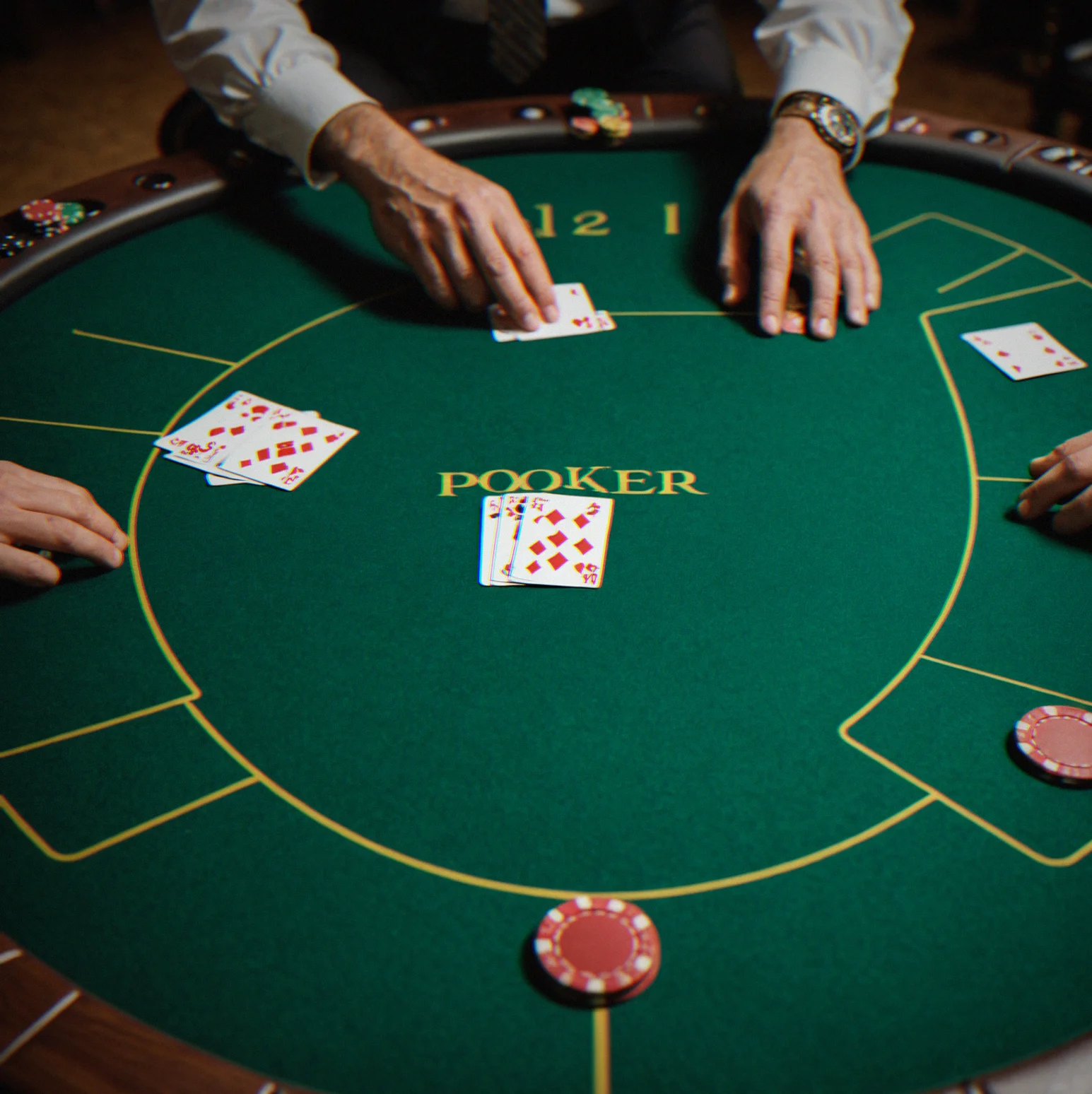
Card shoes and dealing equipment
A card shoe lets you deal without fumbling with your hands. The spring-loaded release keeps it from jamming up. Most tournaments run 6-deck shoes. You'll also want chip trays so you can organize everything and handle payouts fast. Both come standard in tournament packages.
Check local gaming regs
Private poker might be totally legal where you are or it might need a gaming license. It varies. Before you book anything, talk to whoever runs your venue and check with local authorities. We carry liability insurance and can help you navigate what you need to do on your side.
Delivery and setup logistics
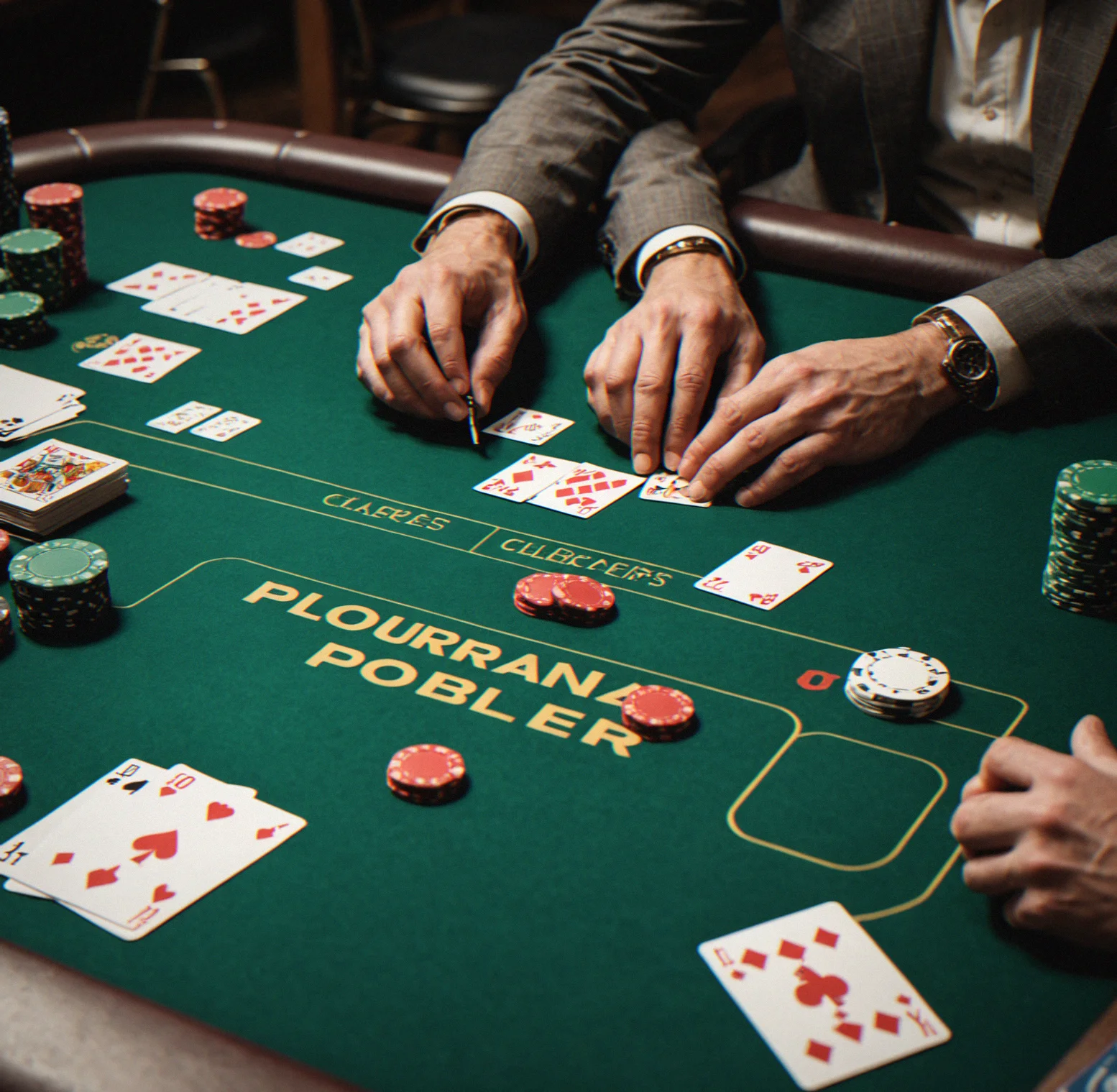
Everything shows up on a truck. Getting everything installed and ready takes a couple hours, maybe four if you're setting up a bunch of tables. We do the leveling, install the felt, test the cup holders and chip trays, and brief your dealer. We haul it all back out too. You just need to make sure nothing got damaged and count the chips.
What cheap equipment costs you
Plastic chips feel terrible in your hand. Tables wobble around. The felt gets stained and starts pilling. Your guests pick up on all of it immediately. You lose credibility. Get the real thing.
Common Questions
Before you call
Most first-time renters ask the same things. Here's what actually matters. The rest you'll figure out.